
Reviewed · HANOI COUNTRYSIDE TOURS
Hanoi Countryside Bike Tour: Red River Culture & Daily Life
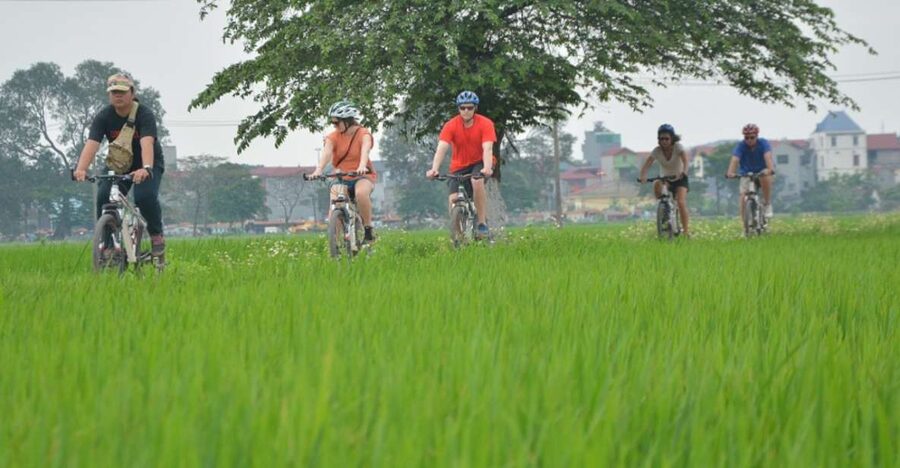
Pedal past Hanoi’s quiet countryside and daily life. This half-day ride is a smart way to escape traffic, plus learn how people live through guided stops like the riverside village gate and Co Loa. I also like that the English guide Khoi gets mentioned for making Vietnam’s culture and history click. One thing to consider: you’ll cycle around 35 km, so you’ll want decent comfort on a bike.
What makes this tour feel practical is how often it’s about moving through real places, not just posing for photos. You’ll get a choice of routes across the Red River (bridge or a small boat), then keep rolling through rice fields and farmland while your guide explains what you’re seeing. And because it ends at a local cafe with coffee/tea, you don’t just burn daylight—you get an easy, non-rushed finish.
Finally, it’s built for small groups (up to 10) and includes a bike, helmet, water, and pickup/drop in the Old Quarter. That’s great for convenience, though it also means you’ll share the pace and stops with the group, and the ride depends on weather and the day’s route choice.
In This Review
- Key highlights worth your attention
- Why Hanoi countryside cycling beats traffic-bound sightseeing
- Old Quarter pickup, helmets on, and the 35 km reality check
- Crossing the Red River: bridge wheels or a small-boat shortcut
- Village gate, history lessons, and the feeling of place
- Rice fields and agriculture: seeing everyday Vietnam in motion
- Co Loa ancient capital and its temple stop
- Visiting locals and chatting about real daily life
- Hanoi coffee culture: an easy finish after 35 km
- Price and value: what $44 buys you in a small group
- Who this tour fits best, and who should skip it
- Should you book the Hanoi Countryside Bike Tour?
- FAQ
- How long is the Hanoi countryside bike tour?
- What distance will I cycle?
- Is the tour in English?
- How big is the group?
- What’s included in the price?
- What should I bring?
- Where are pickup and drop-off locations?
- Are there any extra fees on holidays?
Key highlights worth your attention
- Two-way Red River crossing options: go via Long Bien bridge or save distance with a small boat
- Daily life stop: visit a local house and chat about everyday routines
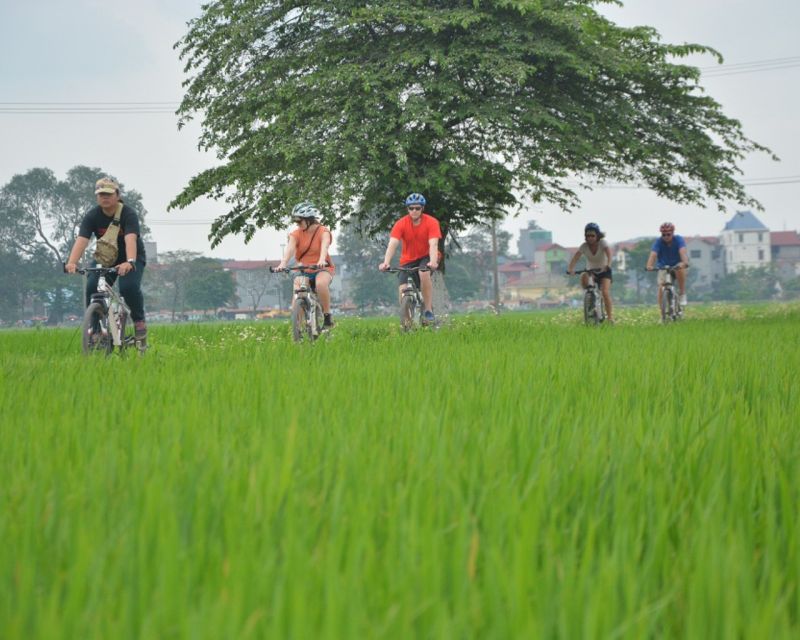
- Rice fields and agriculture: see how farming shapes life just outside Hanoi
- Co Loa ancient capital and temple: history stop that feels connected to the area you rode through
- Local conversations on the return: a calmer, human-side look at countryside Vietnam
- Coffee/tea finish: a comfortable end that matches Hanoi’s coffee culture
Why Hanoi countryside cycling beats traffic-bound sightseeing
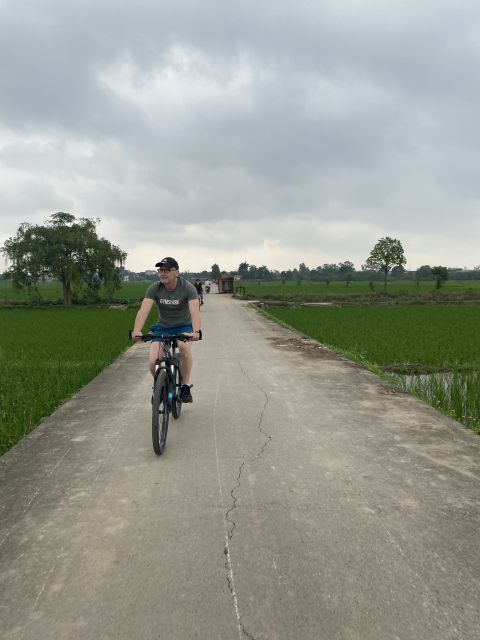
Hanoi can be loud. This tour is different because you’re not stuck in it. Once you leave the city, the ride gives you that rare feeling of space—air, fields, and small moments you’d miss if you were just driving.
You also get a guided route that’s built around meaning. You start with culture-adjacent stops right near the Red River, then move into rural life with rice fields and agriculture. That mix matters because it prevents the tour from becoming one long “scenic ride” with no context. Instead, you learn what you’re seeing as the road changes—urban edges give way to farmland, then you circle back through slower, more local scenes.
One of the most useful parts for me is the way the route adapts. On some days you’ll cycle across Long Bien bridge; on others you might cross by small boat to save distance. That choice can change the day’s mood a lot: cycling keeps you in motion and gives you views, while the boat shortens the ride and adds a sensory break.
More slow days out in the rice country



Old Quarter pickup, helmets on, and the 35 km reality check
This is billed as a half-day tour, and it is—but you should treat it like a real bike outing, not a casual stroll. Expect about 4 hours total and roughly 35 km of cycling. If you’re used to casual sightseeing walking, it can still be fine, but you’ll want to be comfortable staying in a steady pace for the full ride.
Logistics are simple. Pickup and drop-off are in the Old Quarter, and the tour also offers pickup options at two locations within the area. You’ll likely start by getting to a bike rental location (via taxi or personal vehicle), then you’ll be issued your bicycle and helmet.
For what to bring, the basics are the big deal:
- Comfortable shoes (you may have some time off the bike)
- Sunglasses and sunscreen (sun and glare matter when you’re rolling through open areas)
Not allowed items are straightforward: no alcohol or drugs, and pets aren’t part of the plan. The tour isn’t suitable for children under 3 ft (90 cm) and it isn’t set up for pregnant women. If that applies to you, it’s worth choosing a different style of tour.
Crossing the Red River: bridge wheels or a small-boat shortcut
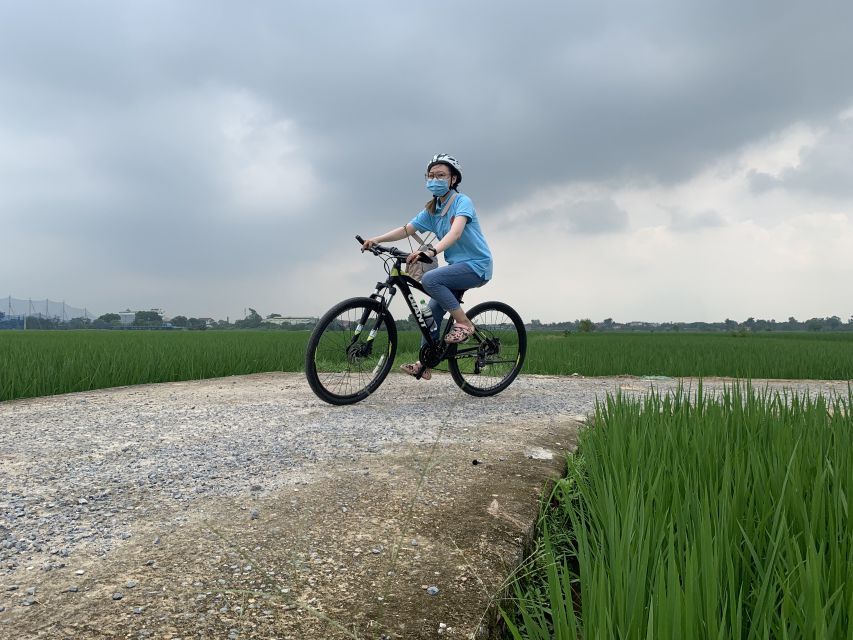
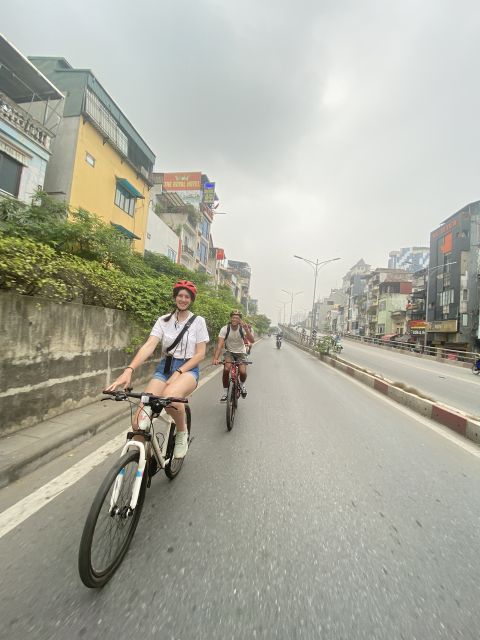
The Red River crossing is one of those “small detail” things that ends up feeling huge during the day. It’s the hinge between Hanoi’s built-up edge and the countryside you came for.
Depending on the day and weather, you’ll have one of two ways to cross:
1) Cycle across Long Bien bridge
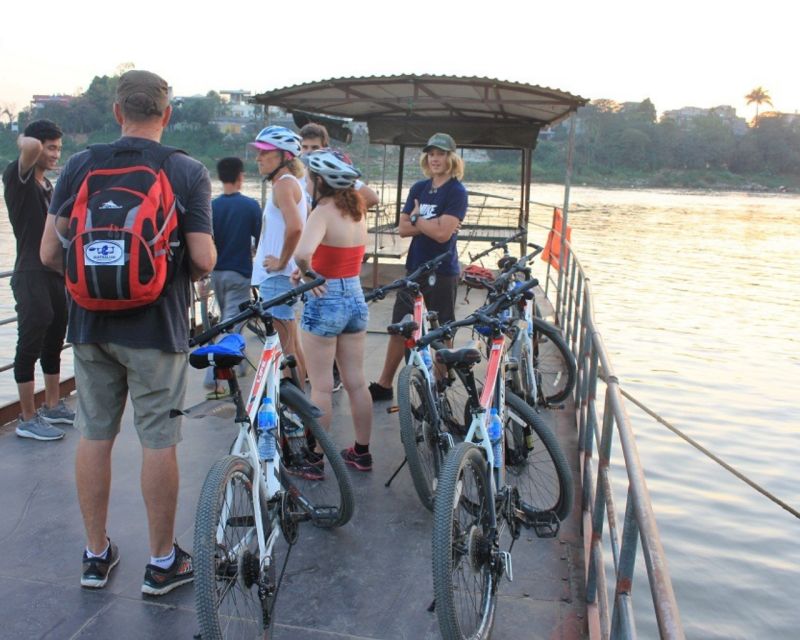
2) Cross the Red River by small boat to save distance instead of riding the longer bridge option
If you’re the type who loves steady motion and wide views, the bridge option is a treat. You get a longer visual sweep and more time “in the air” with the bike rhythm. If you’d rather spend energy on countryside roads and keep the ride from feeling too long, the boat option can be the better trade-off. Either way, you still get that river moment—water sounds, shifting light, and the change in surroundings that signals you’re leaving the city behind.
When you return, you may cross back again by small boat. That creates a neat rhythm to the day: you go out with the route choice, then come back with the calmer, scenic river crossing.
Village gate, history lessons, and the feeling of place
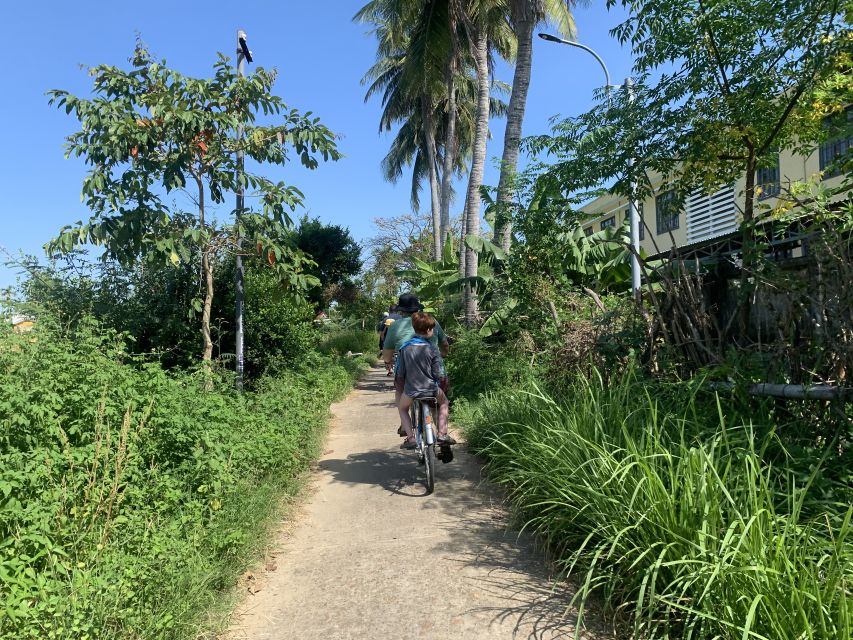
One of the first culture stops is an ancient village gate across the Red River. This is the kind of stop that works best when you’re on a bike, because you can immediately see how the area’s history connects to its geography.
You’re not just being told dates. You’re learning about the area’s history and culture while the environment around you makes sense. A gate is more than architecture—it signals where people entered, traded, gathered, and marked community boundaries. With a guide explaining what it meant and where it fits into local life, the stop becomes practical, not just decorative.
This is also where the tour starts blending “education” with “movement.” You’re cycling through spaces, then stopping to anchor what you saw. That pattern repeats later with rice fields and Co Loa, and that’s what keeps the history from feeling like a disconnected lecture.
If you prefer guided explanation over reading plaques, this tour format tends to land well. It’s designed to be English-language instruction from a live guide, and you’ll likely get questions answered as you go.
Rice fields and agriculture: seeing everyday Vietnam in motion
After the village gate, you’ll keep riding through vast rice fields and rural areas. This is one of my favorite parts of countryside tours because it’s not just pretty. It’s functional. Rice-growing regions shape work schedules, family routines, and even the pace of daily life.
Your guide walks you through what you’re seeing along the way—agriculture and rural life in the area. The value here is that you’ll understand the scenes instead of just snapping photos of fields. When you know what rice fields represent and how farming ties into everyday life, the countryside becomes legible.
A bike tour also helps you notice details. You travel slowly enough to register small changes—plant growth patterns, water management areas, paths connecting fields, and how the countryside sits relative to the river. Those are the kinds of observations that a car window might skip.
One gentle drawback: the scenery is open, which means sun and wind can matter. That’s why sunscreen and sunglasses are on the “bring” list for a reason.
More of Hanoi from the saddle
- Ninh Binh Full-Day Tour from Hanoi to Hoa Lu, Tam Coc & Mua Cave Via Boat & Bike★ 5.0 · 4,384 reviews
- Ninh Binh Day Trip: Hoa Lu-Trang An/Tam Coc-Mua Cave-Cycling-Boat★ 5.0 · 1,886 reviews
- From Hanoi: Hoa Lu & Tam Coc with Buffet lunch & Cycling★ 4.4 · 616 reviews
Co Loa ancient capital and its temple stop
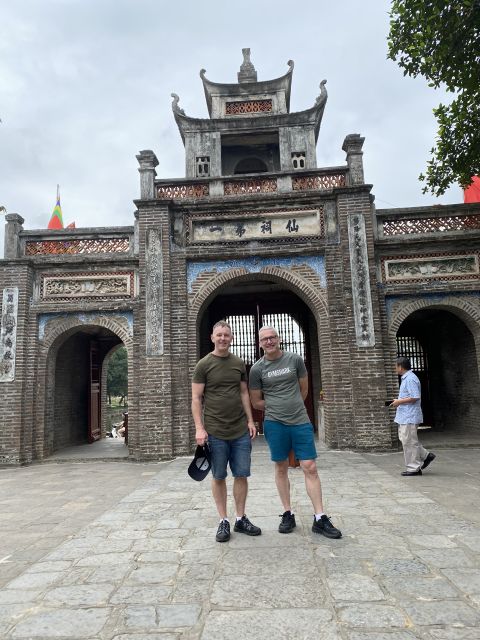
Next up is an ancient temple and the ancient Vietnamese capital of Co Loa. This stop is where the tour pivots more clearly into historical context, but it’s not a sudden switch into a museum-style day.
Because you’re arriving by bike from rural scenes, Co Loa feels tied to the land rather than floating off on its own. Your guide connects what you’re riding through with the history of the region, so you get a clearer sense of why this place mattered to earlier generations.
Here’s what makes this stop worth your time: it’s paired with the day’s pacing. You’ve been out among rice fields and everyday rural life. Then you pause at a historical site. That contrast creates a mental reset. It’s not only “look at this monument.” It’s also “notice how a historical capital sits within the same region you just rode through.”
If you’re the type who likes a guided explanation more than scanning at your own pace, you’ll probably appreciate how the guide frames the site and answers questions as you go.
Visiting locals and chatting about real daily life
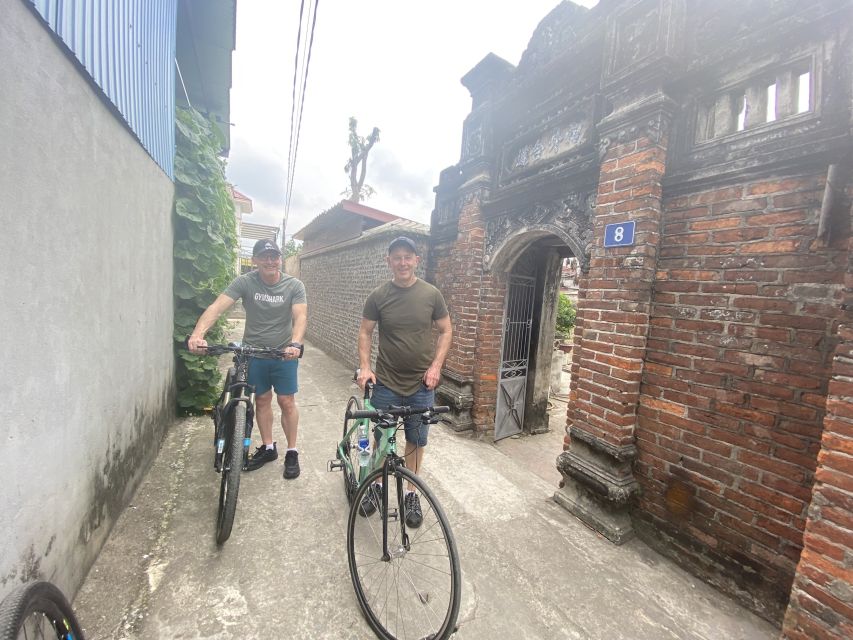
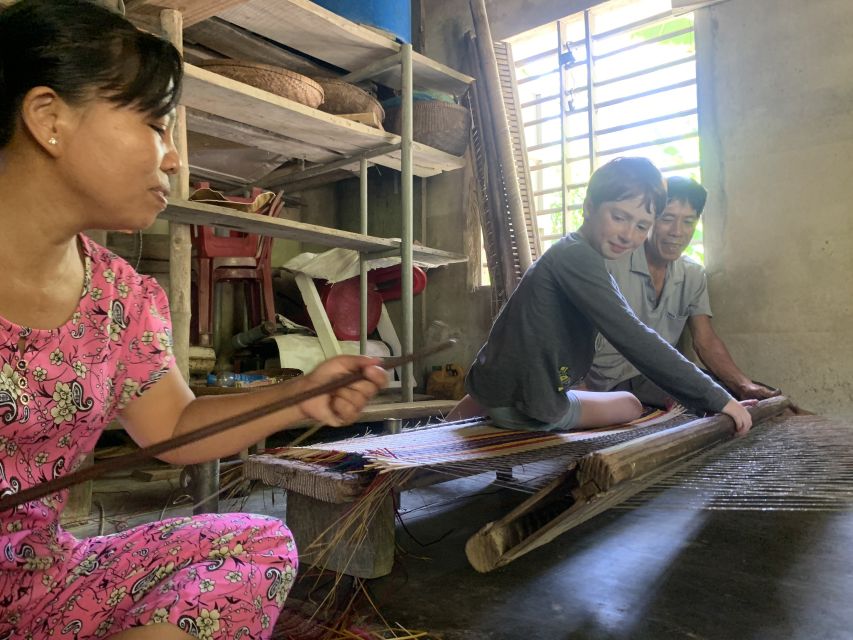
On your way back, the tour includes a visit with locals. This is the part that tends to make the day feel human.
The plan is simple: you’ll chat, ask questions, and learn about Vietnamese customs from everyday people. Even if you’re not fluent in Vietnamese, a good guide can help translate context and keep the conversation respectful. The point isn’t to force deep interviews—it’s to understand routine, attitudes, and what feels ordinary to locals.
This kind of stop is also why the countryside bike format works. You’re not just passing by. You’ve slowed down and chosen to be present. That choice shows up in how locals may respond to you—people generally interact differently when you’re not rushing through in a vehicle.
If you’re someone who enjoys conversations as much as sightseeing, this is one of the best value sections of the tour. It gives you stories, not just sights.
Hanoi coffee culture: an easy finish after 35 km
At the end, you stop at a local cafe for coffee and/or tea. This is one of those endings that makes the whole day feel balanced.
Cycling days can be tiring, and open countryside riding can build a thirst you don’t want to ignore. The tour includes bottled water earlier, plus coffee/tea at the finish. That means you can refuel without hunting around for a place after the ride.
Coffee in Hanoi has a style of its own, and the cafe stop is designed to let you experience that culture in a low-pressure way. You also get a chance to decompress with your group and compare notes—what route you had, which part you liked most, and what surprised you.
If you don’t drink coffee, the included option of tea helps. It’s a practical detail that keeps the experience comfortable for more people.
Price and value: what $44 buys you in a small group
At $44 per person, this tour isn’t trying to compete with half-day city walking tours. You’re paying for a few concrete things that add up:
- A professional English-speaking guide
- Bike rental plus a helmet
- Bottled water
- Coffee/tea at the end
- Pickup/drop-off in the Old Quarter
- A small group limit (up to 10), which keeps the day from turning into a bottleneck
For a half-day that mixes countryside cycling, guided cultural stops, and river crossing, that bundle can be good value—especially if you don’t want to plan a route yourself or rent gear and coordinate transfers.
One cost consideration: there’s a $10 surcharge on New Year, Tet holidays, Liberation/Reunification Day (30/4), International Workers’ Day (01/05), and National Day (02/09). If your trip falls near those dates, expect the total price to jump.
Overall, I see this as a “pay for guidance and convenience” tour. If you’re comfortable riding and you love rural scenes, it’s usually the kind of structured outing that saves you time while still feeling authentic.
Who this tour fits best, and who should skip it
This is a strong match if you:
- Like cycling and can handle about 35 km over 4 hours
- Want countryside views without the stress of handling roads or route planning
- Enjoy cultural context, especially history and everyday life
- Prefer small groups (up to 10) and live English guidance
You might want to skip it if:
- You don’t feel comfortable on a bike for the full distance
- You need an itinerary that’s mostly flat walking and minimal riding
- You’re traveling with someone who fits the stated limits (children under 90 cm, or pregnant women)
If you’re flexible and you want a day that feels more local than typical city sightseeing, this is the kind of half-day that can become a highlight of your Hanoi stay.
Should you book the Hanoi Countryside Bike Tour?
I’d book it if your goal is to see the countryside near Hanoi in a way that actually explains what you’re looking at. The combination of traffic-free-feeling cycling, a house visit for daily life, and the Co Loa stop for historical context makes the day feel complete. I’d also lean toward it if you heard that guide Khoi does a great job bringing culture and history to life—because this tour’s value depends on the guide’s ability to connect scenes to meaning.
Skip it if you’re expecting an easy, mostly effortless sightseeing ride. With about 35 km of cycling, you’ll want to be ready to pedal.
If you’re okay with that, this is one of the more practical ways to get out of the city and still feel grounded in real Vietnamese life.
FAQ
How long is the Hanoi countryside bike tour?
The tour duration is 4 hours.
What distance will I cycle?
The tour is about 35 km for cycling.
Is the tour in English?
Yes. The live tour guide speaks English.
How big is the group?
The group is small, limited to 10 participants.
What’s included in the price?
Included items are bottled water, a professional guide, use of a bicycle, helmet, coffee and/or tea, and pickup and drop-off at the Old Quarter.
What should I bring?
Bring comfortable shoes, sunglasses, and sunscreen.
Where are pickup and drop-off locations?
Pickup and drop-off are in the Old Quarter of Hanoi. Pickup is optional, and you should wait in the hotel lobby. If you’re outside the Old Quarter, pickup isn’t included.
Are there any extra fees on holidays?
Yes. There is a $10 surcharge on New Year, Tet holidays, Liberation/Reunification Day (30/4), International Workers’ Day (01/05), and National Day (02/09).
More Tours in Hanoi
- Ninh Binh Full-Day Tour from Hanoi to Hoa Lu, Tam Coc & Mua Cave Via Boat & Bike
★ 5.0 · 4,384 reviews





More Tour Reviews in Hanoi


Out in the Hanoi Countryside


Latest Hanoi write-ups from our team


Hanoi Countryside Tours, compared.
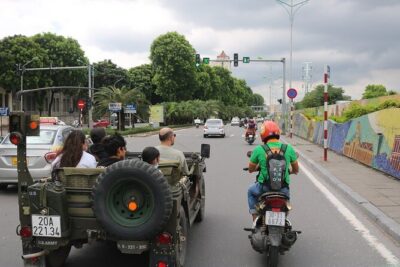 ★ 5.0Hanoi City Tour Highlight, Train Street Combine visit CountrysideFrom $59925 reviews
 ★ 5.0Hanoi Countryside Motorbike Tour: Red River Culture & Daily LifeFrom $55681 reviews
 ★ 5.0Hanoi Jeep City Highlight, Backstreet, Train Street, CountrysideFrom $55666 reviews
 ★ 5.0Hanoi Jeep Tour: Red River Countryside Culture & Daily LifeFrom $57536 reviews
 ★ 5.0Hanoi Jeep Tour: Red River Countryside+ Backstreet+ Train-streetFrom $57338 reviews
 ★ 5.0Hanoi Bicycle Tours: Half Day Bicycle Tours Hanoi CountrysideFrom $59322 reviews
 ★ 5.0Hanoi Jeep Tours Led By Women: City & Red River Half DayFrom $59276 reviews
 ★ 5.0Hanoi Jeep City Tour combine Countryside Train Street, Hidden GemFrom $53181 reviews
Browse the lists this tour appears in