
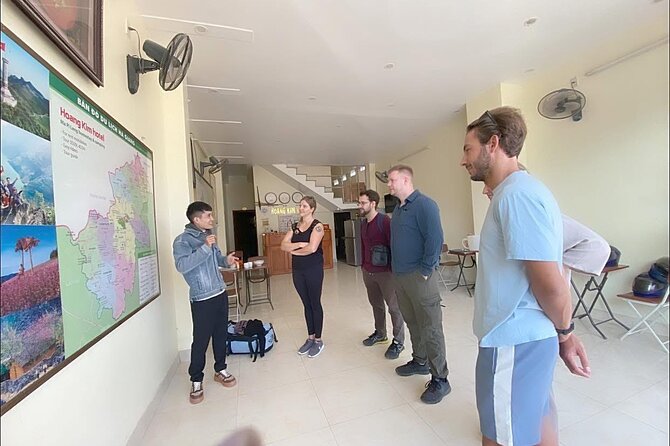
Reviewed · HA GIANG LOOP TOURS
Ha Giang – Cao Bang – Ban Gioc Waterfall 5 days 4 nights
Road dust and mountain air in five days. This Ha Giang–Cao Bang–Ban Gioc route strings together big northern highlights like Quan Ba Heaven Gate, Ma Pi Leng Pass, and Ban Gioc Waterfall with a tight 6–10 person vibe and an English-speaking guide.
I love how the trip mixes famous viewpoints with hands-on culture stops like the Hmong King’s Palace and a forging village visit, and the meals included plan makes the days feel smoother. The one real trade-off: expect long road days with a lot of time on buses and in cars or motorbikes with a driver.
In This Review
- Key highlights at a glance
- Why this route works: more than a checklist
- Price and what you really get for $450
- Getting from Hanoi and settling into Ha Giang
- Day 1: Ha Giang City, Quan Ba Heaven Gate, and Yen Minh base
- Ha Giang City (about 1 hour)
- Quan Ba Heaven Gate (about 1 hour)
- Yen Minh (the long evening stretch)
- Day 2: Hmong King’s Palace, Lung Cu Flag Tower, Dong Van Old Quarter
- Dinh Vua Meo (Hmong King’s Palace) (about 1 hour, included)
- Lung Cu Flag Tower (about 1 hour)
- Dong Van Old Quarter (about 12 hours)
- Day 3: Ma Pi Leng Pass and the Nho Que River boat ride
- Ma Pi Leng Pass (about 1 hour)
- Nho Que River boat trip (about 2 hours, included)
- Transfer to Cao Bang (Day 3 still includes a long move)
- Day 4: Ban Gioc (Detian Falls), Nguom Ngao Cave, and Truc Lam Pagoda
- Ban Gioc Waterfall – Detian Falls (about 2 hours, included)
- Nguom Ngao Cave (about 1 hour, included)
- Truc Lam Pagoda (about 1 hour)
- Day 4’s cultural add-on: Khuoi Ky Stone Village
- Day 5: Phuc Sen forging village and Angel Eye Mountain
- Phuc Sen Forging Village (about 1 hour)
- Mountain God’s Eye / Angel Eye Mountain (about 1 hour)
- Accommodation and meals: where the inclusions really matter
- The small-group experience: your best friend on mountain days
- Who should book this trip
- Should you book this Ha Giang – Cao Bang – Ban Gioc Waterfall trip?
- FAQ
- How long is the Ha Giang – Cao Bang – Ban Gioc Waterfall trip?
- Where does the tour pick up and where does it end?
- Is this a small-group tour?
- What transportation is included?
- What meals and tickets are included in the price?
- Can I cancel for a full refund?
Key highlights at a glance
- Small group, max 10 travelers for a more relaxed pace and easier photo stops
- English-speaking tour guide plus driver know-how for safe, efficient travel on winding roads
- Nho Que River boat trip timed for the canyon views near Ma Pi Leng
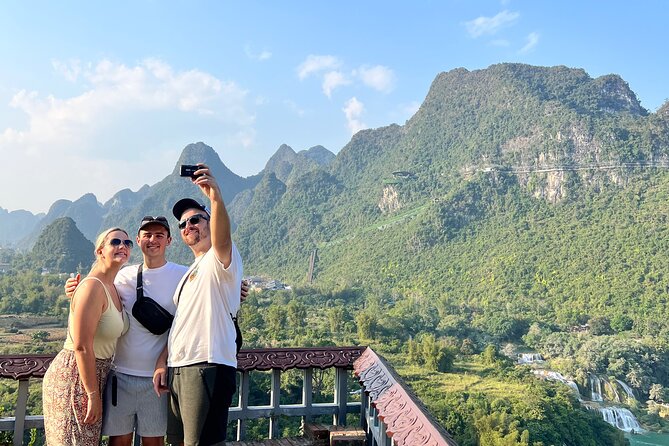
- Ban Gioc (Detian Falls) + Nguom Ngao Cave packaged into one waterfall-and-geology day
- Community tourism stops like Khuoi Ky Stone Village for a more local feel
- Angel Eye Mountain and forging culture on the Cao Bang side for a strong ending
Why this route works: more than a checklist
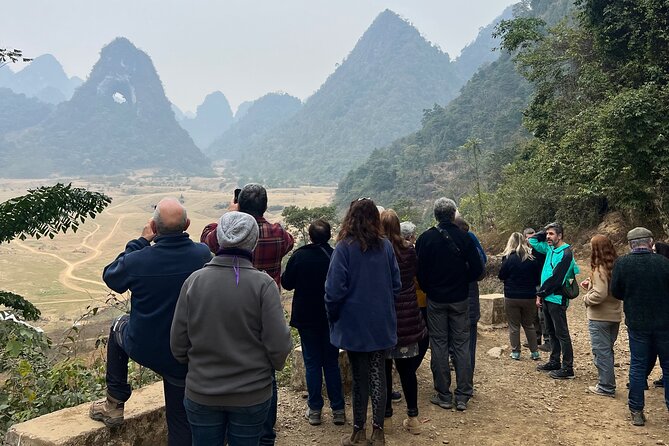
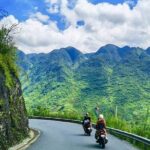
This trip earns its place because it follows a logical “north-to-north” arc. You start in Ha Giang, work through the classic loop sights, then shift to Cao Bang for Ban Gioc and the caves and community stops that sit just off the main waterfall area.
What makes it feel good for you is the balance. You’ll get photo-friendly viewpoints (Quan Ba, Ma Pi Leng, Lung Cu), then the slower moments that make the photos worth it (the river boat time, cave time, and village visits). And because the tour is capped at 6–10 people, you’re less likely to spend your day playing catch-up.
More runs around the Ha Giang loop

Price and what you really get for $450
At $450 per person for roughly 5 days / 4 nights, the value comes from what’s bundled. This isn’t just transport and a few tickets. It includes:
- Luxury bus or limousine Hanoi to Ha Giang and back, plus the return from Cao Bang
- Homestay or hotel in Ha Giang and Cao Bang
- A car or motorbike with driver
- English-speaking tour guide
- All entrance fees
- Mineral water
- Meals: 5 lunches, 4 dinners, 5 breakfasts
- Vegetarian meals available
If you were trying to build this yourself, you’d likely pay separately for intercity transport, a guide, entrance tickets, and the accommodation. Here, the “hard stuff” is handled, so you can focus on the views and the day-to-day experience.
Getting from Hanoi and settling into Ha Giang
The tour picks you up in Hanoi Old Quarter at 2 P. Nguyễn Siêu, Hàng Buồm, Hoàn Kiếm, Hà Nội, and it’s designed to bring you out to the northern loop comfortably using a luxury bus or limousine car.
Day 1 starts with an easy on-ramp: Ha Giang City for about an hour, then up through the mountain pass area to Quan Ba Heaven Gate, and finally down to Yen Minh for the evening. Yen Minh acts like a base point, and it’s also a good “real northern Vietnam” contrast—less postcard, more life.
Day 1: Ha Giang City, Quan Ba Heaven Gate, and Yen Minh base
Ha Giang City (about 1 hour)
This stop is short, so don’t expect a deep city tour. Think of it as getting your bearings and setting the tone: mountains are the main character here, and Ha Giang City is the gateway.
Worth a glance beside this Hanoi pick:
- 5 Days Unlimited DATA SIM CARD Vietnam★ 5.0 · 66 reviews
- 5 Days 4 Nights Hanoi – Halong Bay – Peaceful Halong Bay Cruise, one of 7 world Wonders★ 5.0 · 34 reviews
- 5-Day North Vietnam: Sa Pa – Ninh Binh – Halong Cruise from Hanoi★ 4.5 · 27 reviews
Quan Ba Heaven Gate (about 1 hour)
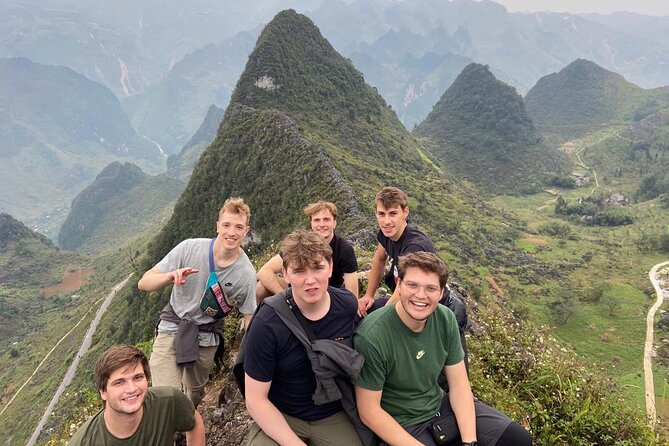
This is where the views start doing the talking. As you climb toward the pass area, you’ll reach Quan Ba Heaven Gate and the famous Twin Mountains, sometimes described as the Fairy Mountains. It’s a quick stop, but it’s exactly the kind of place where a one-hour break makes the whole trip feel scenic and worth it.
Yen Minh (the long evening stretch)
Yen Minh is listed as a longer segment, which usually means travel time plus arrival rhythm, not just walking. You’ll appreciate this because the trip is set up to move efficiently: you’re not just hopping from viewpoint to viewpoint—you’re also getting your “night base” in place.
Tip for your expectations: Day 1 is about momentum. If you want a super slow first day, this route may feel like it starts moving immediately.
Day 2: Hmong King’s Palace, Lung Cu Flag Tower, Dong Van Old Quarter
Day 2 leans into history and the border feeling of Vietnam’s far north. This is the day when you get the sense of place: ethnic culture, a dramatic viewpoint, and an old-quarter town center.
Dinh Vua Meo (Hmong King’s Palace) (about 1 hour, included)
This is a two-story wooden mansion tied to Hmong heritage. You’ll see artifacts and learn through what’s preserved in the building itself. For me, this kind of stop matters because it changes the way you look at the mountains—suddenly the region isn’t only scenery. It’s people and past life.
Lung Cu Flag Tower (about 1 hour)
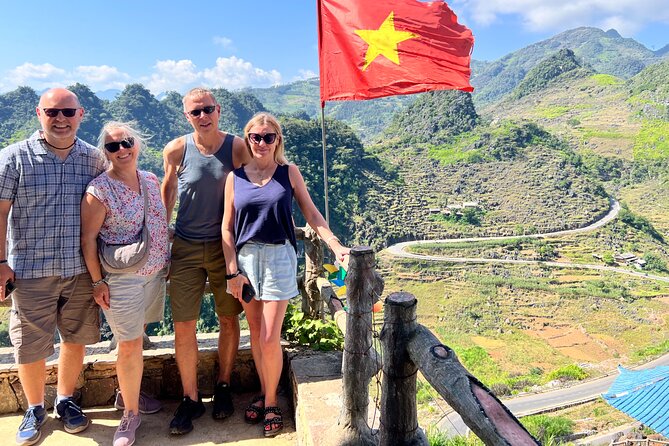
Lung Cu is near Vietnam’s northernmost edge by the China border, and the flag tower gives you panoramic views over the surrounding mountains. It’s the kind of stop that rewards being present for the view rather than racing ahead for photos.
You should come ready for a viewpoint day, but with time to breathe. The tour format typically gives you casual photo time and breaks, which makes a difference on a steep stop like this.
Dong Van Old Quarter (about 12 hours)
Dong Van Old Quarter is built for wandering. Expect cobblestone streets, antique shops, and a lively local market scene. This is a great evening plan because you’re not only looking outward; you’re also seeing how the town works at street level.
One consideration: Old Quarter time can be as much about pacing as it is about sights. If you’re the type who hates waiting for the group, you’ll want to keep your energy steady and plan your exploration in small blocks.
Day 3: Ma Pi Leng Pass and the Nho Que River boat ride
Day 3 is where the route turns into pure mountain drama. You’ll hit Ma Pi Leng Pass and then take a boat trip on the Nho Que River at the base of the pass.
Ma Pi Leng Pass (about 1 hour)
This is described as the most impressive mountain pass in Vietnam, at about 1,500 meters. The main value here is scale. You’re not just seeing a road cut into hills—you’re seeing how the region’s geography shapes everything.
If you’re prone to motion discomfort, passes and winding roads can be a factor. The tour keeps things organized with the guide and driver team, but the roads themselves are still real mountain roads.
Nho Que River boat trip (about 2 hours, included)
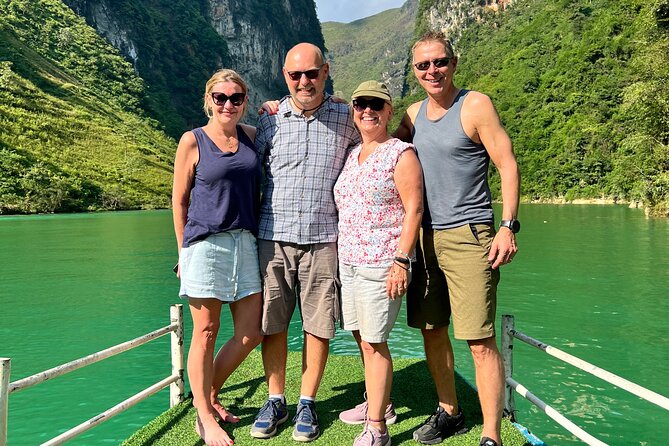
After the pass, the trip descends to the river and shifts to a slower pace: you’ll take a boat through the canyon around the cliffs. This is a strong contrast day. The pass gives you height and distance; the boat ride gives you closeness to the rock walls and a calmer feel.
Also, this is a great photo window, but it’s not just about pictures. The boat time is your chance to slow down, snack, and reset.
Transfer to Cao Bang (Day 3 still includes a long move)
Cao Bang arrives as the next chapter, and the schedule reflects that with a longer day. That’s not a flaw—it’s how the tour makes Ban Gioc reachable without wasting days.
This is also where the small-group setup helps. The pace feels coordinated, and you’re less likely to spend time waiting around.
Day 4: Ban Gioc (Detian Falls), Nguom Ngao Cave, and Truc Lam Pagoda
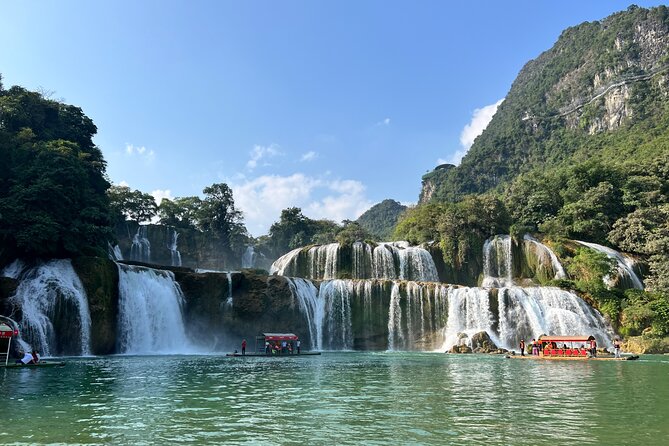
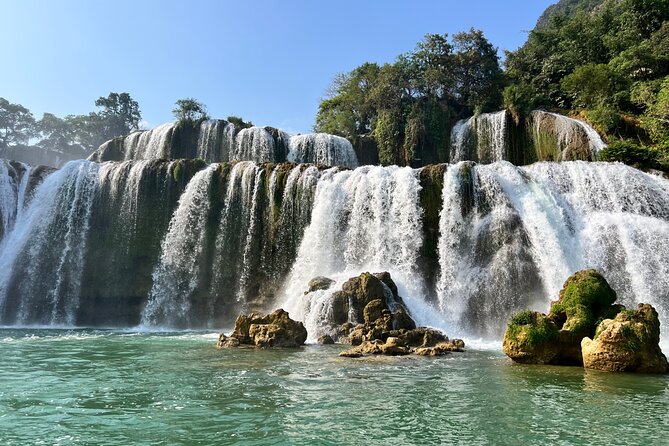
This is the big water-and-rock day. You’ll spend time at Ban Gioc Waterfall (also known as Detian Falls) and then add cave and pagoda stops that are close enough to keep the day from turning into pure driving.
Ban Gioc Waterfall – Detian Falls (about 2 hours, included)
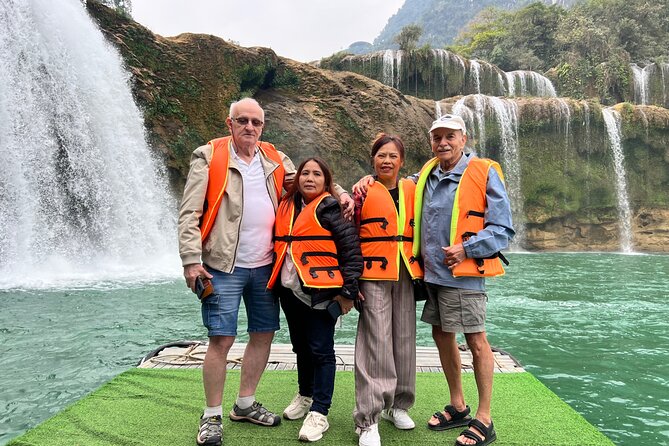
Ban Gioc is one of Vietnam’s grand waterfalls, and it sits on the border between Vietnam and China. The value of this stop is obvious: it’s visual impact. But it’s also one of those places where your guide can help you time things so you’re not stuck in the wrong moment.
Expect a full sightseeing rhythm here: time for photos, time to walk around the viewing areas, and time to just watch the falls keep going.
Nguom Ngao Cave (about 1 hour, included)
Just a short distance away from the waterfall area is Nguom Ngao Cave. It’s known for geological history and natural wonder. Caves are different from waterfalls: you’ll get a quieter pace and a change in texture, plus the satisfaction of seeing something that isn’t only scenic.
Truc Lam Pagoda (about 1 hour)
Near Ban Gioc, the Truc Lam Ban Gioc Pagoda is a spiritual stop and a nice reset point after the big waterfall visuals. Since it’s close to the waterfall area, it fits naturally into the flow without feeling like a separate mission.
Day 4’s cultural add-on: Khuoi Ky Stone Village
Khuoi Ky Stone Village is listed as being about 2 km from Ban Gioc and part of a community-based tourism setup. It’s tied to an older period (listed as between 1594 and 1677 when the Mac dynasty era is referenced), so it’s not just a modern “photo village.”
This stop tends to be valuable because it changes the way you see the waterfall region. Instead of only asking what you can photograph, you also notice how people live beside the natural attractions.
Day 5: Phuc Sen forging village and Angel Eye Mountain
Day 5 is a clever ending: you get local craft and then a more off-the-main-sights viewpoint.
Phuc Sen Forging Village (about 1 hour)
Phuc Sen is a Nung An forging village at the foot of Pác Rằng mountain, around 40 km from Cao Bang city on the route toward Ban Gioc. The village is noted for its forges (about 150 forges), which makes this feel more grounded in work than in performance.
If you care about how people create things locally—tools, metals, craft—this is the kind of stop that sticks after the mountain photos fade.
Mountain God’s Eye / Angel Eye Mountain (about 1 hour)
Then you head to Nui Thung, also called Angel Eye Mountain. It’s listed as about 30 km from Cao Bang city and around 70 km from Ban Gioc. Even though it’s described as still less known, the main draw is the payoff: you trade crowds for the sense that you’re going somewhere for a reason, not just where everyone ends up.
Accommodation and meals: where the inclusions really matter
This tour includes homestays or hotels in Ha Giang and Cao Bang, plus breakfast, lunch, and dinner across the days (5 lunches, 4 dinners, 5 breakfasts). You also get mineral water and the option for vegetarian meals.
For you, this matters because remote northern routes can turn into a daily planning headache if meals aren’t handled. Here, you’re not spending half your day trying to find a place that’s open, priced fairly, and able to feed a group with different preferences.
One more thing: with an English-speaking guide and drivers running the day, the schedule stays coherent. That reduces stress, especially on days with multiple stops like Ban Gioc plus cave plus pagoda.
The small-group experience: your best friend on mountain days
The tour keeps group size to a maximum of 10 travelers, and that changes how your day feels. You’re less likely to get separated, and photo moments happen without a chaotic stampede.
You’ll also see practical care from the driver-and-guide team. In the feedback for this kind of Ha Giang Loop style trip, guides and drivers like Thang are often praised for being organized, keeping things safe, and being friendly in how they manage the timing so you’re not rushed out of each stop.
Who should book this trip
This one is a strong fit if:
- You want the classic northern Vietnam route—Ha Giang Loop energy plus Cao Bang’s Ban Gioc highlight—without planning each leg yourself
- You like a mix of views and culture stops (palace, flag tower, old quarter, cave, village)
- You’re comfortable with long days on the road and want a guided schedule to reduce decision fatigue
- You prefer a small group over big coach tours
It might not be the best match if you strongly dislike vehicle time or prefer a slower, fully flexible pace.
Should you book this Ha Giang – Cao Bang – Ban Gioc Waterfall trip?
If you want a single package that links Ma Pi Leng Pass, Nho Que River, and Ban Gioc (Detian Falls) into a tight 5-day circuit, I think it’s a smart buy for the price. The value is the bundling: transport, guide, entrance fees, accommodation, and meals all wrapped together.
I’d book it when you’re excited by nature and also by culture stops—because that’s what this itinerary is really built around. Just go in knowing the trip moves, and you’ll spend real time in vehicles getting from one “wow” moment to the next.
FAQ
How long is the Ha Giang – Cao Bang – Ban Gioc Waterfall trip?
It runs for about 5 days and 4 nights.
Where does the tour pick up and where does it end?
The tour starts at 2 P. Nguyễn Siêu, Hàng Buồm, Hoàn Kiếm, Hà Nội, Vietnam and ends back at the meeting point.
Is this a small-group tour?
Yes. The maximum group size is 10 travelers.
What transportation is included?
You’ll use a luxury bus or limousine car for the Hanoi to Ha Giang / Cao Bang transfers, and you’ll have a car or motorbike with driver during the sightseeing days.
What meals and tickets are included in the price?
The package includes breakfast (5), lunch (5), dinner (4), mineral water, and all entrance fees. Vegetarian meals are available.
Can I cancel for a full refund?
Yes. You can cancel for a full refund if you cancel at least 24 hours before the experience’s start time. Free cancellation applies.
More 5-Day Experiences in Hanoi




More Tour Reviews in Hanoi



More of the Ha Giang Loop
Latest Hanoi write-ups from our team


Ha Giang Loop Tours, compared.
 ★ 5.0Ha Giang Loop 3 days Small group- From Ha NoiFrom $1361,114 reviews
 ★ 5.03-Day Ha Giang Loop Tour from Ha Noi and ReturnFrom $220652 reviews
 ★ 4.9From Hanoi: 3-Day Motorbike Ha Giang Loop with Easy RiderFrom $227501 reviews
 ★ 5.03-Day Ha Giang Loop Tour (small group with easy rider)From $189411 reviews
 ★ 4.93-day Motorbike Ha Giang Loop Luxury Tour With Easy Rider298 reviews
 ★ 4.9From Hanoi: 3-day Ha Giang Loop – Small groupFrom $144213 reviews
 ★ 4.9From Hanoi: 2-Day 2-Night Ha Giang Loop Motorbike TourFrom $177145 reviews
 ★ 5.04-Day Ha Giang Loop Tour (small group with easy rider)From $229137 reviews
Browse the lists this tour appears in