

Reviewed · TOURS
French Quarter Tour
Hanoi’s architecture tells ideological stories. South of Hoàn Kiếm Lake, the French Quarter is a rare mix of ancient pagodas, European façades, and even modernist Art Deco–style buildings—each one a clue to how Vietnam was shaped over centuries. I love how the tour connects the streets to big-picture change, not just pretty buildings, and I like that it keeps moving so you stay oriented.
One guide tied to this tour, Nikita, is specifically praised for warm delivery and for weaving architecture with family-style storytelling. That human angle makes the contrasts land faster, like the shift from French-influenced designs to Vietnamese political space.
The main thing to watch is that you’re out walking and you’ll want good weather, since the experience depends on being able to move around.
In This Review
- Key highlights worth knowing
- French Quarter Without the Guesswork
- Stop 1: Cultural Friendship Palace and Its Rebuilt Gray Look
- Stop 2: Hanoi University of Science and Technology—French-Era Teaching Footprints
- Stop 3: Hanoi Opera House—European-Style Streets in Plain Sight
- Stop 4: St. Joseph’s Cathedral at the Old Quarter Edge
- Stop 5: Ho Chi Minh Mausoleum Area and the French-Era Political Core
- Price and Value: Is $34 a Good Deal Here?
- What You’ll Notice: Architecture as a Living Timeline
- Practical Tips for a Smooth 3–4 Hours
- Who This Tour Suits (and Who Might Want Another Plan)
- Should You Book This French Quarter Tour?
- FAQ
- How long is the French Quarter tour?
- What does it cost?
- Is it private?
- What’s included in the price?
- What is not included?
- Where does it start and end?
- Do you pay admission at the main stops?
- What happens if weather is bad?
- How does cancellation work?
Key highlights worth knowing
- French Quarter as an “idea map”: you see how political influence shows up in bricks, not just textbooks
- Free admission stops: every listed main site has admission noted as free
- Taxi jumps to save time: you don’t waste hours backtracking on foot
- Coffee and snacks included: a real break built into the flow
- A strong architecture focus: pagodas, European lines, and modernist details get explained clearly
French Quarter Without the Guesswork

Hanoi’s French Quarter sits in a grid of streets south of Hoàn Kiếm Lake, and it feels unusually layered for an Asian capital. You’ll walk past buildings from different eras packed close together, so the neighborhood doesn’t just look historic—it looks argumentative, like different eras keep trying to win the same skyline.
This kind of area can be overwhelming on your own. The big win here is that you’re not just collecting landmarks; you’re learning how different schools of thought left physical fingerprints. That makes the contrast between styles actually meaningful instead of just decorative.
You also get a tour rhythm that makes sense: walk for understanding, then hop by taxi to cover more ground. In a place where motorbikes dominate the streets, that saves your energy and lets you keep your attention on what you’re seeing.
Not sure yet? See how this one sits next to a few Hanoi favourites.




Stop 1: Cultural Friendship Palace and Its Rebuilt Gray Look
The tour starts at Cultural Friendship Palace (Cung Văn Hoa Hữu Nghi), which is also the meeting point. The building described here is recently rebuilt with help from Xô Việt union, and the result is a strong, more gray look than the postcard version of French-era elegance.
This is a smart opening stop because it sets the tone: you’re going to see architecture as a political language. A rebuilt structure can feel less romantic than an untouched one, but it’s often more honest about present-day priorities—what a community chooses to preserve, replace, or reframe.
What to watch for here is the “feel” of the place as you arrive. Before you get to opera house curves and church towers, you’re primed to notice how form and function shift across time. It’s a good warm-up for the rest of the walk.
Stop 2: Hanoi University of Science and Technology—French-Era Teaching Footprints

Next you ride a taxi to Hanoi University of Science and Technology, described as a key early school tied to Indochina-era education. The tour frames it as the first university of Vietnam and Indochina University, where the French government used to teach locals subjects such as medicine and science.
Even if you don’t go inside (admission is noted as free), you still gain something useful: you learn where the city’s colonial influence showed up beyond government offices. Education buildings are often quieter than palaces, but they’re powerful. They shape what comes next, and that makes them a strong anchor point for a French Quarter tour.
If you’re the type who likes to connect dots, this stop helps you understand why the French imprint isn’t only visual. It also shows up as systems—training people, defining curricula, and changing what knowledge was valued.
Stop 3: Hanoi Opera House—European-Style Streets in Plain Sight
After the university area, you walk toward the Hanoi Opera House, a very well-preserved building. The description here is telling: once you step into that surrounding zone, it can feel like you’re not in Asia at all—more like a European precinct.
That perception is exactly why this stop works. The opera house doesn’t exist alone; it sits in an area with streets and sightlines that help the European style land. When you understand the neighborhood planning, the building looks less like a random import and more like a deliberate statement.
Practical tip: go slow here. The opera house is easier to appreciate when you take a moment to look at the immediate setting—front approach, surrounding facades, and how the street layout supports the illusion.
Also, because this is still part of a 3–4 hour experience, this is one of your best chances to pause and get your bearings. Once you get to the cathedral and Ba Dinh area, the pace can feel more political and formal.
Stop 4: St. Joseph’s Cathedral at the Old Quarter Edge
Then comes St. Joseph’s Cathedral, reached via another taxi ride that places you near the edge of the Old Quarter. Here the focus shifts to a different kind of mix: you see a mixed match of architecture in the streets around the cathedral.
This is where the tour leans into community history. The area is described as having had many Catholic families, so the cathedral isn’t treated as a lone monument. Instead, it’s framed as part of a local social world that once clustered around it.
Even if you’re not deeply into church architecture, you’ll likely enjoy this stop for one reason: it’s a transition point. You move from the calmer grandeur of the opera zone into a street environment where the layers feel more everyday. That shift makes the whole French Quarter concept click—styles aren’t isolated; they overlap in real neighborhoods.
- Hanoi Jeep Tour: Food, Culture and Fun by Vietnam Army Jeep★ 5.0 · 15,222 reviews
- Full-Day Ninh Binh Highlights Tour from Hanoi★ 5.0 · 7,761 reviews
- Hanoi: Ha Long Bay Day Cruise – Swimming, Meal, Kayaking★ 4.7 · 7,415 reviews
Stop 5: Ho Chi Minh Mausoleum Area and the French-Era Political Core
The final stop moves you to the political area by taxi, with Ho Chi Minh Mausoleum as the end point. This section is described as a French-government buildout that included many facilities in the area after the year 1884, and the tour connects that era to spaces connected with power, including references to things like the President Palace and Indochina Finance.
This is a major thematic pivot. Up to this point, the French Quarter is about styles in the streets. In Ba Dinh, you’re looking at how influence gets institutional—how ideas get formalized into government space.
A note for how to approach this last segment: treat it like a history viewpoint, not a photo challenge. The mausoleum area has an official feel, and it helps to slow down so you can actually absorb the contrast between civic architecture and the earlier neighborhood mix.
Because the tour ends here, it’s also practical for your next move. If you plan to continue sightseeing in the Ba Dinh complex area, you’re already in position.
Price and Value: Is $34 a Good Deal Here?
At $34 per person for a 3 to 4 hour private tour, the value mainly comes from three things: structure, access, and reduced stress.
First, structure. In French Quarter areas, time disappears fast because the streets are confusing and the sights pile up. This tour’s pace is designed to help you see major anchors without turning your day into a marathon.
Second, access. All the listed main stops show admission as free, so you’re not paying extra entry fees to experience the core sites. That matters, because many city tours look cheap until you hit paid museums and churches.
Third, comfort. Coffee and/or tea plus snacks are included, which is small on paper but huge in practice. It keeps the tour from feeling like a constant walking loop. If you’re trying to do a packed Hanoi schedule, these little resets are worth something.
The only cost wrinkle is transportation during the tour. The tour notes that transportation isn’t included, even though taxis are used between stops. So you should budget for those taxi rides. If you’re traveling with a group, it can still work out well compared to hiring your own private driver for a longer stretch.
What You’ll Notice: Architecture as a Living Timeline
The French Quarter here is described as more than bricks. It’s a tangible record of ideological shifts that influenced Vietnamese culture—French, Vietnamese, and Soviet thinkers and architects are specifically referenced in the architectural story.
That’s the heart of this tour: you’re taught to see buildings as arguments. The styles don’t just coexist; they reflect changes in power and identity. When you pay attention to that, you start to notice patterns:
- European-influenced designs feel more planned and formal
- modernist references can look like statements of a newer mindset
- older religious structures remind you that local beliefs shaped the city long before colonial periods
- fusion details show how cultures negotiate rather than simply replace each other
The tour’s job is to keep those observations from becoming random. It gives you a way to interpret what you see so the neighborhood stops feeling like a confusing photo backdrop.
Practical Tips for a Smooth 3–4 Hours
This is a private tour, and it’s built around moving between a handful of key areas. That means a few practical choices can make your experience much more enjoyable.
1) Wear shoes for walking
Even with taxi segments, you’re still walking at several points. Plan on a few blocks at a time rather than just a quick stroll.
2) Bring a light layer
Some of Hanoi’s comfort depends on weather conditions, and the tour notes that it requires good weather. Even in decent conditions, temps and humidity can shift.
3) Don’t rush the stops
If you hurry, you’ll miss the point. This tour works best when you pause long enough to notice architectural details and how the street setting affects the look.
4) Budget for taxis during the tour
Transportation isn’t included, so taxi rides between locations are something you’ll be responsible for. If you’re watching your total spend, ask your guide early how you’ll handle this part.
5) Use the coffee break
With snacks and tea included, don’t skip it. Timing-wise, that refresh can help you stay focused for the last two stops, which tend to feel more formal and heavier in theme.
Who This Tour Suits (and Who Might Want Another Plan)
This tour fits best if you like context. If you enjoy walking through neighborhoods but don’t want to spend your day piecing together why everything looks the way it does, this gives you the connective tissue.
It’s also a good fit if you like architecture but want the history explained in plain language. The tour’s premise isn’t just sightseeing; it’s interpreting how the city changed.
If you’re the kind of traveler who wants only iconic highlights with minimal explanation, you might feel like you’re spending time learning when you’d rather move fast. In that case, you could still do it, but you’ll probably enjoy it more if you’re willing to slow down for a bit at each stop.
Should You Book This French Quarter Tour?
I’d book it if you’re trying to understand Hanoi fast without getting lost in the details. The combination of free major sites, included coffee/snacks, and an architecture-and-history storyline makes the $34 price feel fair for a private 3–4 hour window.
I would hesitate only if you’re flexible on weather and walking comfort. The tour needs good conditions, and it assumes you can handle moderate walking time.
If you want Hanoi’s French Quarter to make sense—why it looks the way it looks and what that means—this is the kind of tour that helps you see the city with clearer eyes.
FAQ
How long is the French Quarter tour?
It runs about 3 to 4 hours.
What does it cost?
The price is $34.00 per person.
Is it private?
Yes. It’s a private tour/activity, so only your group participates.
What’s included in the price?
Coffee and/or tea and snacks are included.
What is not included?
Transportation during the tour isn’t included.
Where does it start and end?
It starts at Lumi HanoiMặt, Đường Cao Tốc 08, Tây Mỗ, Nam Từ Liêm, Hà Nội and ends at Ho Chi Minh’s Mausoleum, 1 Hùng Vương, Điện Biên, Ba Đình, Hà Nội.
Do you pay admission at the main stops?
The listed stops show admission ticket free.
What happens if weather is bad?
The experience requires good weather. If it’s canceled due to poor weather, you’ll be offered a different date or a full refund.
How does cancellation work?
You can cancel for a full refund up to 24 hours before the experience’s start time. If you cancel within 24 hours, the amount you paid won’t be refunded.
More Tours in Hanoi
- Ninh Binh Full-Day Tour from Hanoi to Hoa Lu, Tam Coc & Mua Cave Via Boat & Bike
★ 5.0 · 4,384 reviews




More Tour Reviews in Hanoi
Latest Hanoi write-ups from our team


Tours, compared.
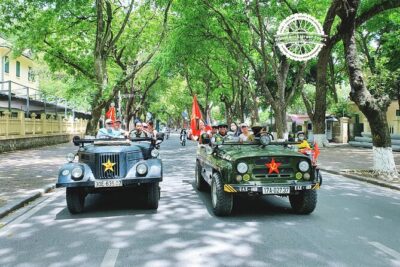 ★ 5.0Hanoi Jeep Tour: Food, Culture and Fun by Vietnam Army JeepFrom $5515,222 reviews
 ★ 5.0Full-Day Ninh Binh Highlights Tour from HanoiFrom $797,761 reviews
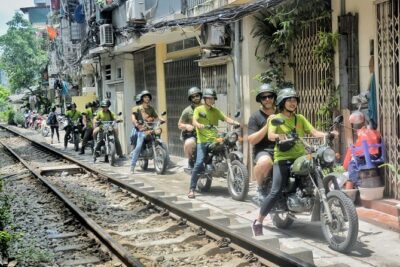 ★ 5.0Hanoi Motorbike Tour: Food, Culture and Fun by Vintage MotorbikeFrom $556,699 reviews
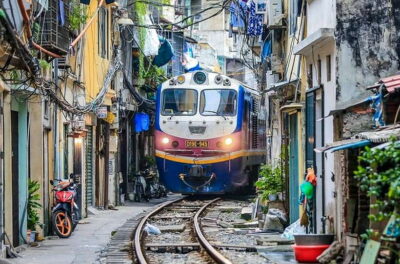 ★ 4.9Guided Food Tour with Train Street VisitFrom $196,239 reviews
 ★ 5.0Small Group Hanoi Street Food Tour with a Real FoodieFrom $284,682 reviews
 ★ 5.0Ninh Binh Full-Day Tour from Hanoi to Hoa Lu, Tam Coc & Mua Cave Via Boat & BikeFrom $334,384 reviews
 ★ 4.7Ninh Binh, Bai Dinh/Hoa Lu, Trang An, & Mua Cave TourFrom $464,279 reviews
 ★ 5.0Ninh Binh HIGHTLIGHT & HIDDEN GEM Tour From Hanoi: Skip-The-LineFrom $894,212 reviews