
Reviewed · HANOI OLD QUARTER TOURS
5 Hours Guided Hanoi Old Quarter Private Walking Experience
Old Hanoi feels close on this walk.
This 5-hour private route stitches together everyday market life, old temples, and French-and-Asian architecture, all with an English-speaking guide who keeps the stops focused. You start at Đồng Xuân Market, then move through streets lined with memories—mural walls, an ancient city gate, and old houses—before ending at the Hanoi Opera House.
I like two things a lot. First, you get a tight mix of cultural sights and real street-level context, so you’re not just looking at buildings. Second, the tour is structured but not rushed: some stops include admission, and you also get coffee/tea plus bottled water, which makes the day easier to manage.
The main drawback to plan for is simple: it’s a full walking tour through a dense old-city grid. If you’re sensitive to heat, crowds, or uneven sidewalks, you’ll want to pace yourself and wear comfortable shoes from the start.
In This Review
- Key Highlights You’ll Feel Right Away
- Why This 5-Hour Private Old Quarter Walk Makes Sense
- Starting at Đồng Xuân Market: An 1889 Market Built for Daily Life
- Phùng Hưng Mural Street and O Quan Chưởng Gate at Street Level
- Bạch Mã Temple: White Horse Legend Meets Real Craft Details
- Ma May Street’s Ancient House: A Late-19th-Century Home You Can Read
- Vietnam National Museum of History: French Colonial Architecture and a Broad Timeline
- Vietnamese Coffee Break and the Opera House Finish
- Price and Value: What $82 Actually Buys You
- Who Should Book, and Who Should Think Twice
- Practical Tips to Make the Walk Feel Easy
- Should You Book This Hanoi Old Quarter Private Walking Experience?
- FAQ
- How long is the Hanoi Old Quarter private walking experience?
- Where does the tour start?
- Where does the tour end?
- Is this tour private?
- What’s included in the price?
- Are admission tickets included?
- What is the meeting point like?
- Do I get a mobile ticket?
- Can I cancel for a full refund?
Key Highlights You’ll Feel Right Away
- Đồng Xuân Market first thing: an 1889-era market building tied to daily life in the Old Quarter
- Street art with a purpose: Phùng Hưng Mural Street uses paintings to tell stories of old Hanoi
- O Quan Chưởng gate: the last surviving city gate, with Nguyen dynasty watch-tower styling
- Bạch Mã Temple details: old wooden doors, a white horse legend, and a shrine layer from 1839
- Ma May Ancient House: a late-19th-century house linked to everyday life in old neighborhoods
- Coffee plus a grand finish: taste Vietnamese coffee, then end near the Opera House
Why This 5-Hour Private Old Quarter Walk Makes Sense
In Hanoi, it’s easy to get overwhelmed. The Old Quarter is crowded, noisy, and full of side streets that all look important. This tour helps because it gives you a clear route, a human guide to translate what you’re seeing, and enough time to stop where it counts.
Because it’s private, you’re not stuck matching your pace to strangers. That matters on a walk like this, where your feet, your questions, and even how long you linger at a temple doorway all affect the day. It also helps with navigation: you’re meeting at Đồng Xuân Market and finishing at the Hanoi Opera House, so you have a built-in “start and stop” frame.
Value-wise, the price is easier to justify when you look at what’s included. You get an English-speaking guide, bottled water, coffee/tea, and tour fees/taxes. Several stops also include admission tickets, which would otherwise add up on your own.
One more practical point: the tour lasts about 5 hours, not a half-day that evaporates in transit. You’ll likely spend meaningful time at the market and the key religious and historical stops rather than just passing by.
More wandering through the Old Quarter lanes



Starting at Đồng Xuân Market: An 1889 Market Built for Daily Life
Your morning (or early part of the day) begins at Đồng Xuân Market, Chợ Đồng Xuân. It’s described as one of the oldest and biggest markets in the Old Quarter, and it’s a local anchor—something Hanoians associate with pride and everyday routine.
What makes this start work well is timing and context. Entering the Old Quarter through the market means you’re immediately in the place where people buy, sell, bargain, and snack. The market itself has an interesting layering story: it was built in 1889 as French administration, then renovated several times over the years. That mix of eras shows up in the building and the way the market feels—modern commerce packed into a classic structure.
Plan for this stop to take about 45 minutes. Since admission is included, you can focus on exploring instead of hunting for ticket windows. Also, because the tour notes that the market sells everything from souvenirs and clothing to household goods and foodstuffs, you’ll see why it works as a “cultural warm-up.” Even if you don’t buy much, you’ll understand the rhythm of the area faster than if you start at a single landmark.
Tip from a practical mindset: markets can be overwhelming for photos because of movement, lighting, and crowds. If you’re photo-focused, you’ll get better results by watching where stalls narrow into lanes, then stepping into those quieter pockets for a clearer shot.
Phùng Hưng Mural Street and O Quan Chưởng Gate at Street Level
After the market, you shift from commerce to storytelling. Phùng Hưng Mural Street has been revived with large mural paintings that depict older times—vendors, women carrying flowers, and old tram scenes. The key thing I like here is that it’s not just decoration. The murals act like a time-warp map: you can look at the pictures and then walk alongside the real street they describe.
This stop is about 30 minutes, and admission is free. In plain terms, you get a low-effort, high-value “understanding layer.” Even if you know nothing about Hanoi’s past, the murals give you a visual language to connect what you see on the next corners.
Then comes Old City Gate (O Quan Chưởng / Old East Gate). This is the only surviving city gate of ancient Hanoi, and it’s named to remember a chief of the army and Nguyen soldiers who fought against the French. Architecturally, it’s described as having typical watch-tower styling from the Nguyen dynasty, so you’re not just looking at a “wall remnant”—you’re seeing a specific defensive design.
This is also about 45 minutes, and admission is free. What you’ll likely appreciate most is how the gate turns the Old Quarter into something more than streets and shops. It’s a reminder that this area used to be walled and defended, even though Hanoi has expanded since then.
Practical note: city gates are often calmer than markets, but the streets around them can still be busy. If you want quieter photos, stand back from the roadway and let groups pass before you shoot.
Bạch Mã Temple: White Horse Legend Meets Real Craft Details
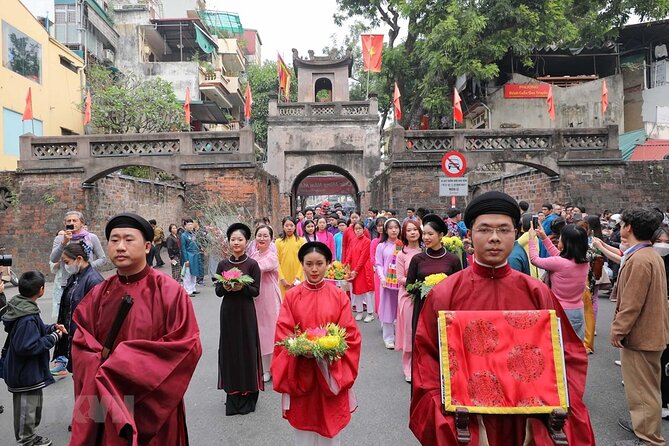
Bạch Mã Temple is small but meaningful, and it’s one of the classic stops in the Old Quarter. The name literally means White Horse Temple. The current structure is said to date largely from the 18th century, even though it’s tied to an earlier origin.
The story layer is part of why the stop works. You’re told Emperor Lý Thái Tổ built it in the 11th century to honor a white horse that guided him to the site. Later, in 1839, a shrine to Confucius was added. That’s a useful detail because it shows how religious spaces can change over time without losing their identity.
Expect about 30 minutes here, and admission is included. The tour highlights include passing through the old wooden doors to see the statue of the legendary white horse. You’ll also notice a red-lacquered funeral palanquin, which gives the interior a vivid, ceremonial feel.
What to be mindful of: temples often have rules about photography and dress, even if those rules aren’t spelled out in the tour notes. To keep things smooth, dress respectfully (cover shoulders if you can) and watch what others do at the entrance.
This stop is also a good pace-break. After market noise and street-level movement, the temple environment helps your brain switch gears from shopping-mode to history-mode.
Ma May Street’s Ancient House: A Late-19th-Century Home You Can Read
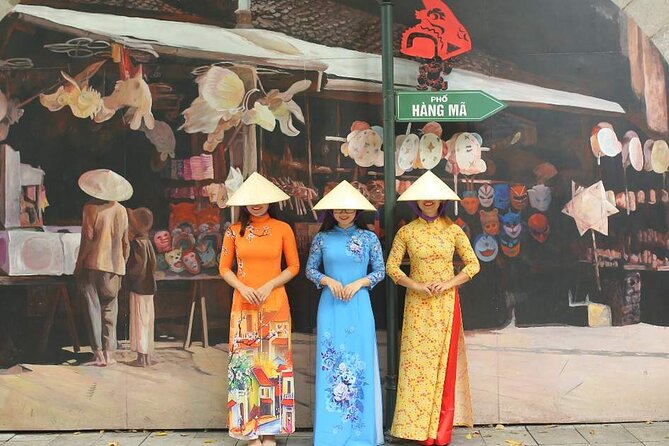
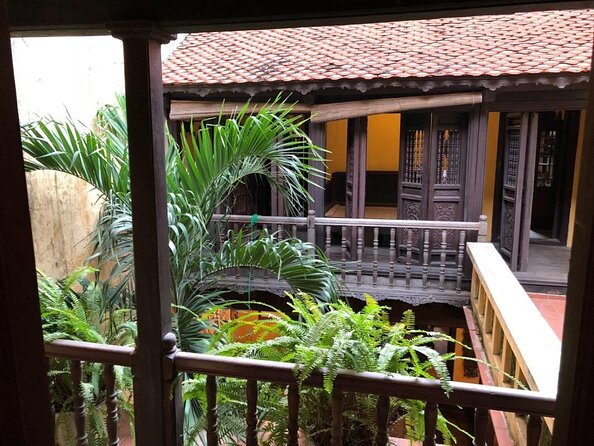
Next you move into something more human-scale: an ancient residential house on Ma May Street. This street is described as home to many of Hanoi’s oldest houses, and the stop focuses on an example that reflects how people lived in earlier periods.
The tour notes it as one of 14 ancient houses in Hanoi, built in the late 19th century, while still keeping original features. That’s exactly the kind of detail that makes a historic house stop worthwhile. Instead of just looking at an exterior wall, you’re meant to learn about daily life—how a home was shaped for its time, and what “old Hanoi” looked like from the inside.
You’ll spend about 1 hour, and admission is included. In a walking tour, a full hour can feel like a long time—but with a house, that extra time usually lets you notice layout cues, woodwork, and the kinds of spaces that suggest family routines.
One more value angle: if you’re the type who thinks museums are too far away from real life, this house stop bridges the gap. It’s not an object behind glass; it’s a lived-in type of space, and that helps understanding stick.
Wear shoes you can stand in for a while, and keep your phone handy for quick reference shots—just be respectful of any no-photo areas.
More of Hanoi covered on foot
- [HOT] Hanoi Old Quarter Walking Street Food – Small Group Tour★ 5.0 · 2,163 reviews
- Private Walking Tour of Hanoi City★ 5.0 · 1,251 reviews
- Hanoi: Small-Group Street Food Walking Tour★ 4.8 · 1,165 reviews
Vietnam National Museum of History: French Colonial Architecture and a Broad Timeline
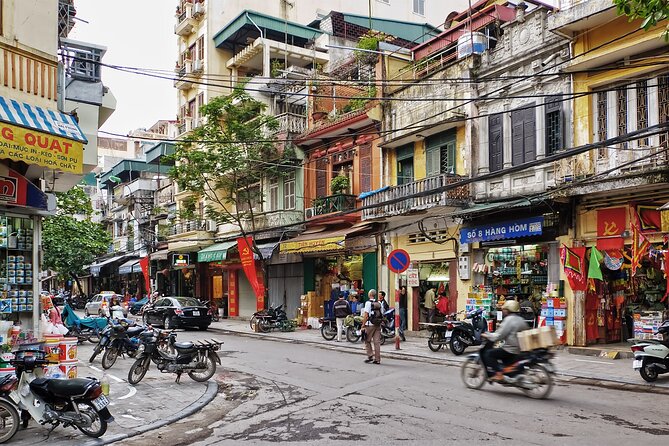
After the ancient house, the route shifts toward a “bigger picture” location: the Vietnam National Museum of History. The building itself is a highlight. You’re told it sits in an elegant French colonial structure, with a blend of early 20th-century European and eastern architectural elements.
This stop is about 1 hour, and admission is included. If you’re worried that a museum stop will feel like a lecture, don’t. The description suggests you’ll view exhibits that cover Vietnam’s development from prehistoric periods through national formation, with thematic exhibitions on Vietnamese culture and history.
For many people, the smart move is to use this museum time as a lens for the rest of the walk. By the time you reach this point, you’ve already seen markets, religious sites, and old architecture. The museum helps you connect those visuals to a timeline.
A practical way to get value (without getting tired): skim for the big sections that match what you’ve seen—ancient governance, cultural shifts, and any themes that relate to the Old Quarter’s layered past. The museum is likely too large to take in every detail, so focus on the parts that help you interpret what you saw earlier.
Vietnamese Coffee Break and the Opera House Finish
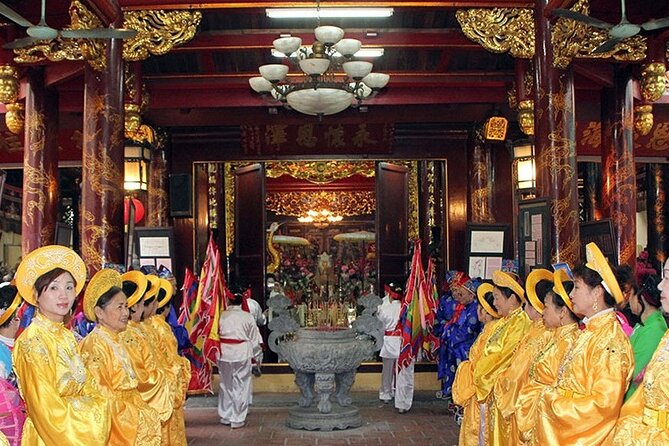
The tour includes tasting real Vietnamese coffee, with coffee and/or tea provided as part of the experience. This is a simple add-on, but it matters. After hours of walking and indoor/outdoor transitions, a drink gives you a clean pause and a chance to reset.
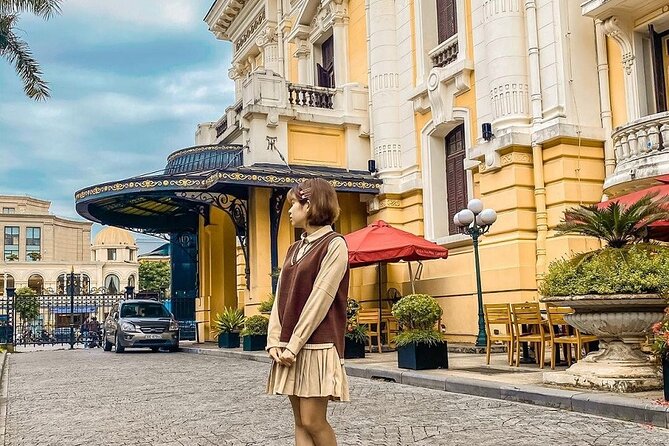
Then you end at the Hanoi Opera House, which the tour describes as a major architectural and cultural symbol. It’s a free stop with about 30 minutes allotted. Even if you’re not into performances, the building is worth a look because it anchors the center of Hanoi and creates a satisfying “destination feeling” after the tight alley streets of the Old Quarter.
This is also a practical landing spot for your next plan. Finishing near the Opera House makes it easier to branch into something else—dinner nearby, a short ride to another area, or a slower stroll with fewer turns than the old streets.
If you’re taking photos, go easy on time here. Opera House photos are popular, and you’ll get better angles if you step back to include street context rather than only the façade.
Price and Value: What $82 Actually Buys You
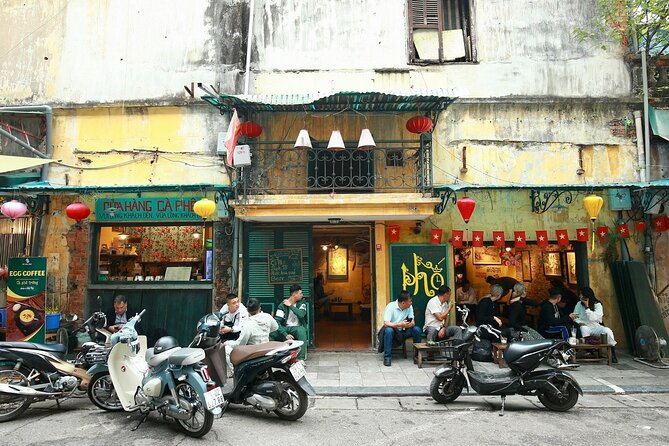
At $82 per person for about 5 hours, this tour sits in a mid-range zone for Hanoi. What makes it feel fair is the mix of guided time and included extras:
- English-speaking guide for the full walk
- Bottled water plus coffee and/or tea
- All fees and taxes included
- Admission tickets included at several major stops (market, Bạch Mã Temple, ancient house, and the History Museum)
- Some key sights are free (Phùng Hưng Mural Street, O Quan Chưởng gate, Opera House)
If you tried to recreate this alone, you’d spend time figuring out what to see, where to go next, and which sites charge admission. That’s the hidden cost of solo travel. Here, your route is already stitched together, and your guide adds interpretation.
Is it worth it if you only want one or two landmarks? Probably not. This tour works best if you want a connected day—market to temple to house to museum—so the guide can tie the details into a whole picture.
Who Should Book, and Who Should Think Twice
This is a strong fit if you like your sightseeing with context. It suits solo travelers who want direction, couples who want a romantic walk with stops that feel meaningful, and families who appreciate a guided rhythm instead of a self-made checklist.
It’s also a good choice if you want less pressure. The tour is private, so you’re not forced into someone else’s pace. And multiple stops include admission tickets, which reduces hassle.
Think twice if you have limited mobility or stamina. The tour is described as a walking experience, and the Old Quarter is built on narrow streets. Even with “most travelers can participate,” the day still assumes you can comfortably walk for hours and handle crowded areas.
Practical Tips to Make the Walk Feel Easy
A few small moves can make a big difference:
- Wear comfortable shoes. You’ll be on your feet from the market onward.
- Bring a little extra cash if you want snacks beyond the included coffee/tea. The market area alone has food and small purchases everywhere.
- Keep an eye on hydration. Bottled water is provided, but you’ll still want to drink steadily on warm days.
- Plan your start around Dong Xuan Market, and treat the Opera House end as your handoff point for dinner or onward transport.
- If you’re sensitive to religious spaces, dress respectfully for Bạch Mã Temple.
And do this: ask your guide what you should notice in each stop. The tour is built around interpretation—your questions help turn sights into understanding.
Should You Book This Hanoi Old Quarter Private Walking Experience?
Book it if you want a guided day that connects Hanoi’s street life to temples, old homes, and a museum that gives you a broader timeline. The included English guide, admission at key stops, and coffee/tea make it easier to spend less time managing logistics and more time paying attention.
Skip it if you only want one landmark or if you’d rather wander the Old Quarter at your own pace with no fixed route. Also consider your comfort with a full walking schedule through dense streets.
For most people, this is a smart way to get your bearings fast and still leave with a real sense of how the Old Quarter works.
FAQ
How long is the Hanoi Old Quarter private walking experience?
The tour lasts about 5 hours.
Where does the tour start?
You meet at Đồng Xuân Market (Chợ Đồng Xuân, Đồng Xuân, Hoàn Kiếm, Hà Nội 100000, Vietnam).
Where does the tour end?
The tour ends at the Hanoi Opera House (1 Tràng Tiền, Phan Chu Trinh, Hoàn Kiếm, Hà Nội, Vietnam).
Is this tour private?
Yes. It’s a private tour/activity, so only your group participates.
What’s included in the price?
The price includes all fees and taxes, an English-speaking guide, coffee and/or tea, and bottled water.
Are admission tickets included?
Admission is included at several stops, including Đồng Xuân Market, Bạch Mã Temple, the Ancient House, and the Vietnam National Museum of History. Other stops listed are free, like Phùng Hưng Mural Street, the Old City Gate (Quan Chuong), and the Hanoi Opera House.
What is the meeting point like?
You start right at Đồng Xuân Market, a central Old Quarter location and one of Hanoi’s biggest traditional markets.
Do I get a mobile ticket?
Yes, the experience includes a mobile ticket.
Can I cancel for a full refund?
Free cancellation is available if you cancel up to 24 hours in advance of the experience start time.
More of Hanoi, Step by Step





More Tour Reviews in Hanoi





More of the Old Quarter


Latest Hanoi write-ups from our team




Hanoi Old Quarter Tours, compared.
 ★ 5.0[HOT] Hanoi Old Quarter Walking Street Food – Small Group TourFrom $142,163 reviews
 ★ 5.0Private transfer between Hanoi Airport (HAN) and Hanoi Old QuarterFrom $18850 reviews
 ★ 5.0Hanoi Food Tours in Hanoi Old Quarter (Small Group/Private)From $28657 reviews
 ★ 5.0Hanoi Old Quarter Private Walking Tour with Student GuideFrom $5590 reviews
 ★ 5.0Hanoi Old Quarter Walking Street Food TourFrom $27423 reviews
 ★ 5.0Hanoi old quarter sightseeing & street food eating by MotorcycleFrom $55333 reviews
 ★ 5.0Private Street Food Tour – Walking Hanoi Old QuarterFrom $33294 reviews
 ★ 5.0Bat trang Pottery Class in Hanoi Old Quarter/Handmade experienceFrom $38247 reviews
Browse the lists this tour appears in